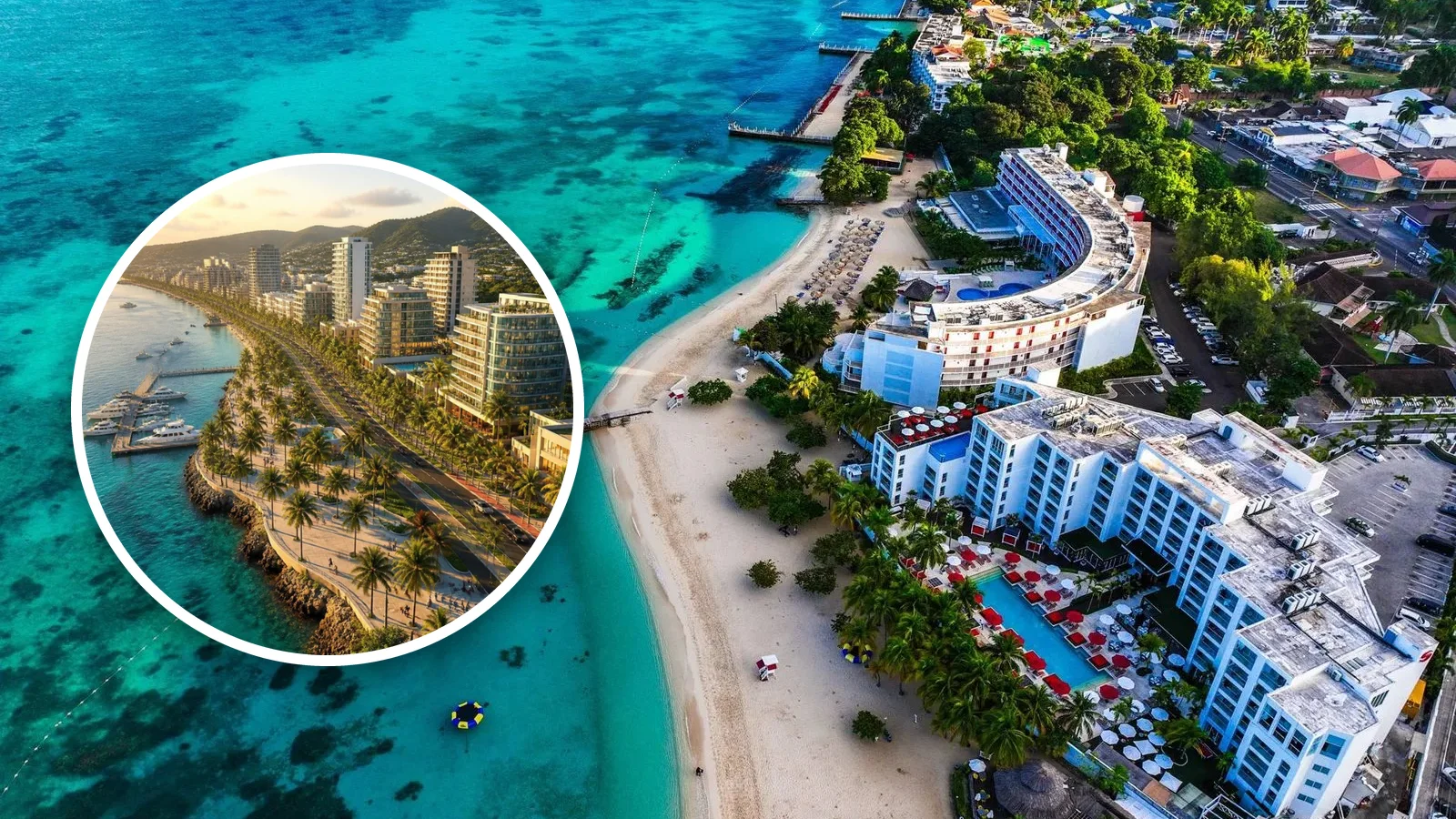
Few stretches of road carry as much of Montego Bay’s identity as the Hip Strip, now Jimmy Cliff Boulevard. It is where many visitors first meet the city, and where many residents would like to see it at its best. So the news that the waterfront and the Hip Strip are back on the redevelopment agenda deserves attention.
What was announced
Speaking at the Jamaica Product Exchange (JAPEX) media breakfast on 15 September, Tourism Minister Edmund Bartlett said Montego Bay is going to be redesigned and that the entire waterfront area is going to be reimagined. As reported by Janet Silvera in the Jamaica Gleaner, the plans form part of a wider transformation of the tourism capital.
According to the Jamaica Observer, the minister said the waterfront will look much like Biscayne Boulevard in Miami, with the Freeport area earmarked for special attention. The Urban Development Corporation, the Port Authority of Jamaica and the Factories Corporation of Jamaica have been asked to work with architects to finalise designs, with the new National Reconstruction and Resilience Authority (NaRRA) to oversee delivery. A stakeholder meeting on the Hip Strip with Prime Minister Dr Andrew Holness is set for 2 October.
The minister was also candid that the work is at an early stage, with limited detail available so far.
Why I am optimistic
A waterfront is a city’s front door. When it is redesigned well, with better sidewalks, lighting, public space, drainage and traffic flow, the benefits reach well beyond the hotels on the strip. Restaurants and retail improve, the area feels safer and more walkable, and the neighbourhoods that overlook it become more desirable places to live and to rent.
We have seen this pattern in waterfront cities across the region. The Biscayne comparison is ambitious, but the principle is sound: public investment in the waterfront tends to pull private investment in behind it.
It also fits a larger picture. Montego Bay already has landmark private projects under way, including The Pinnacle on the Reading Peninsula, and a planned mixed-use Freeport waterfront. A coherent public plan that connects these pieces would make the whole city more valuable than the sum of its projects.
What I will be watching
Montego Bay has heard about Hip Strip upgrades before. Previous announcements, including a J$1.2 billion upgrade in 2021 and a J$1 billion plan in 2022, did not deliver the transformation many hoped for. So I will be watching for three things:
- A published design and budget after the 2 October meeting, not just a vision.
- A delivery timeline under NaRRA, with clear responsibility for each phase.
- Infrastructure first: drainage, utilities, parking and traffic management, which are what make a waterfront work every day.
What it means for buyers and owners
If you own, or are considering, property in Montego Bay’s waterfront districts, the hillside communities overlooking the bay, or the Freeport and Reading corridors, this is a story to follow closely. Announcements alone do not move values; delivery does. But the period between a credible plan and its completion is often when well-chosen property is still priced on today’s streetscape rather than tomorrow’s.
I will share an update after the 2 October meeting. If you would like to talk through how the plans might affect a specific property, get in touch.