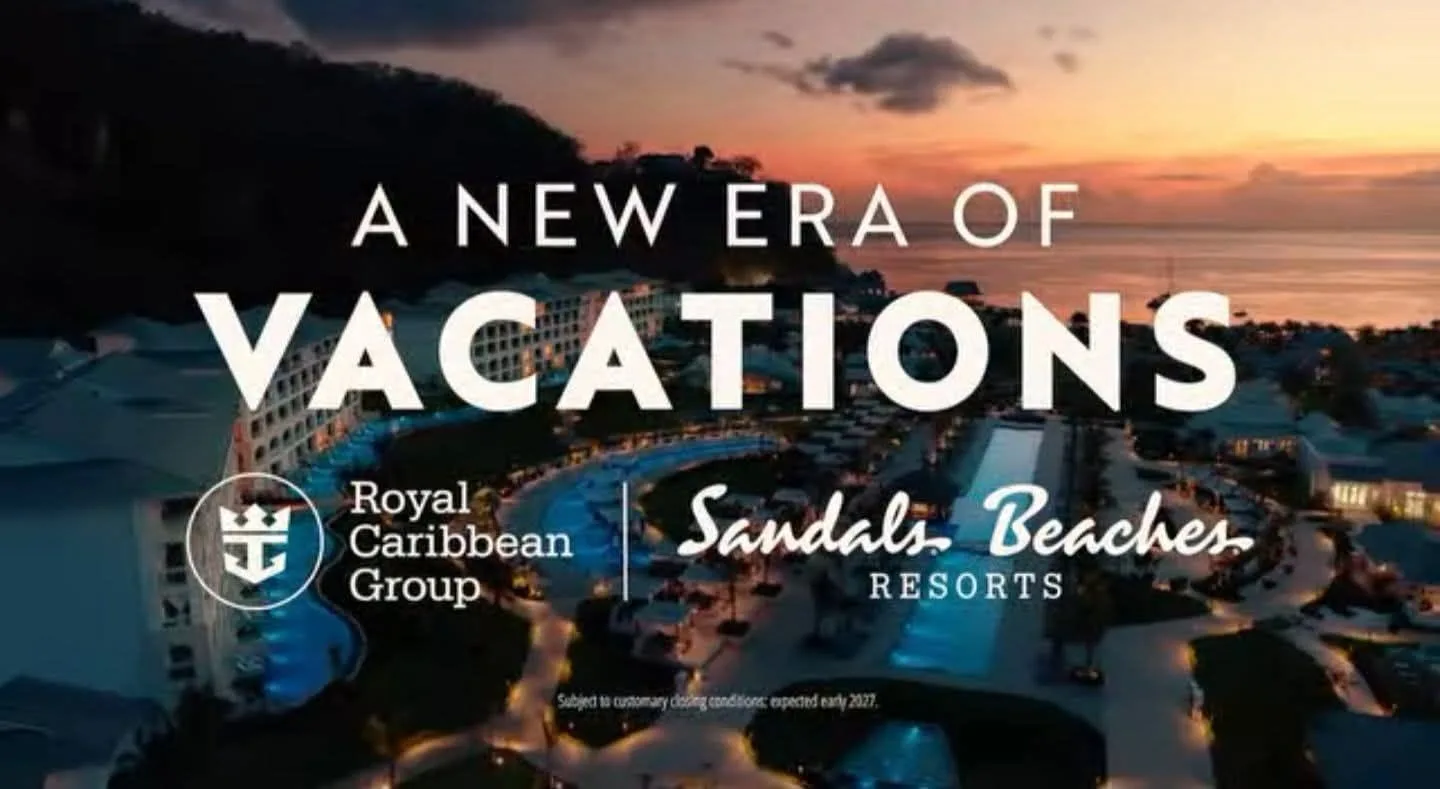
First, congratulations to Adam Stewart and the entire Sandals and Beaches Resorts family. On 23 September, Royal Caribbean Group announced it will acquire a 50% stake in Sandals and Beaches Resorts for approximately US$3 billion, forming a partnership between two of the best-known names in Caribbean travel. The deal is expected to close in early 2027.
For those of us in Montego Bay, this one feels personal. Sandals was founded in Jamaica by the late Gordon “Butch” Stewart more than four decades ago and grew from here into a global brand. Adam Stewart remains Executive Chairman and will share board leadership with Royal Caribbean’s Chairman and CEO, Jason Liberty. In his words, the future has never been brighter
.
A valuation that speaks for Jamaica
The price reflects roughly ten times forward earnings, a valuation that puts a Caribbean-built company among the most valued hospitality businesses anywhere. That is a statement about Sandals, but it is also a statement about the region, and about Jamaica in particular, as a place where world-class value can be created and sustained.
When one of the largest vacation companies on earth commits billions to a business anchored in the Caribbean, every other investor notices. That is what I mean when I say the value of Jamaica went up this week. Not overnight on any price index, but in the way the world’s capital markets think about the island.
What it means on the ground
- More visitors, more ways to arrive. The partnership links Sandals and Beaches with the Royal Caribbean, Celebrity Cruises and Silversea brands and their loyalty programmes. Cruise-and-resort combinations introduce Jamaica to travellers who may never have considered a land stay here.
- Growth, including in Jamaica. The announcement points to further expansion of the Beaches brand, including Runaway Bay here in Jamaica, alongside new destinations elsewhere in the region.
- Jobs and supply chains. Resort growth supports employment, local suppliers and the service economy that North Coast communities depend on.
Why buyers and investors should pay attention
Property markets follow confidence. Deals like this tell international buyers that Jamaica’s tourism economy is being backed by institutions with long time horizons and deep balance sheets. That supports demand for second homes and short-term rentals, and it strengthens the case for the new residential developments rising around Montego Bay.
It lands at a moment when the island is already building at scale: a US$4.2 billion hotel pipeline, national reconstruction after Hurricane Melissa and a planned redesign of the Montego Bay waterfront. Taken together, the signals point in one direction.
As always, the right property still depends on the fundamentals: location, quality, management and price. But the backdrop for owning in Jamaica has rarely looked stronger. If you would like to explore what that means for you, I would be glad to talk.